POP Punning
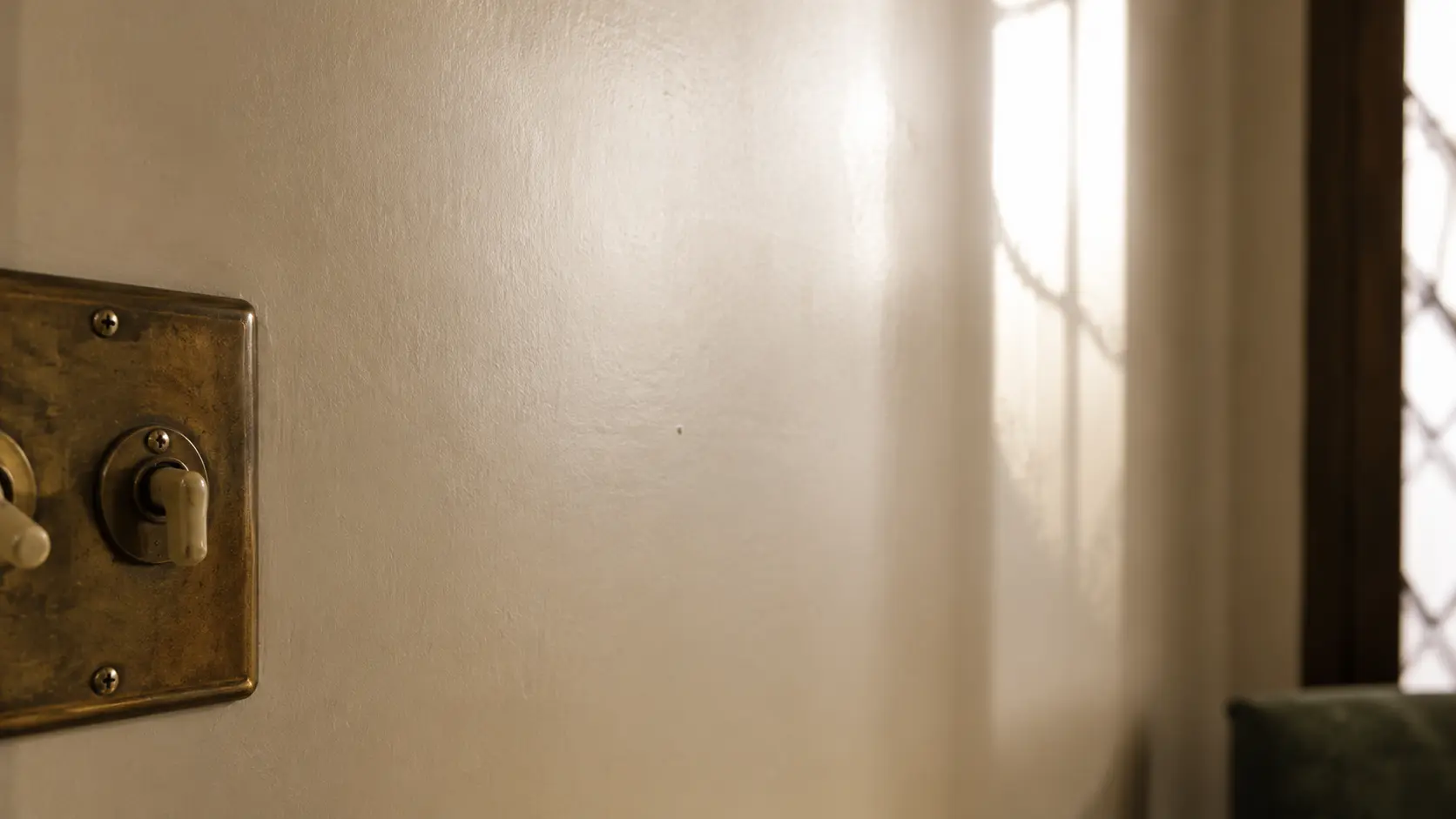
POP Punning in Bangalore
Smooth, paint-ready wall finishing applied over plastered surfaces — the difference between a wall that paints flat and one that shows every flaw.
75+ POP Punning projects in Bangalore
What is POP Punning?
POP punning is a thin finishing layer of Plaster of Paris applied on top of cement-plastered walls and ceilings to bring the surface to paint-ready smoothness. The cement plaster underneath is the structural layer; the punning is the finish layer that determines whether painted surfaces look flat or flawless. A typical punning coat is 2 to 4 mm thick, hand-troweled, then sanded to a fine plane before primer.
The difference between a wall with punning and one without is small in absolute terms — a millimetre or two of surface refinement — but visually dominant. Paint on a directly-plastered wall shows the cement plaster's natural surface texture: every trowel mark, every minor crater, every unevenness. Paint on a properly punned wall reads as a single flat plane. For premium residential and hospitality interiors, the punning step is the difference between work that "looks done" and work that "looks finished".
Punning is not a ceiling system in its own right; it's a surface preparation that pairs with every paint-grade wall and ceiling in the catalogue. We supply it as a standalone service for clients who want to upgrade an existing painted finish, and we include it by default on gypsum ceiling and POP ceiling installations where the spec calls for the highest paint-ready surface. The three readiness levels below describe what each spec actually delivers under paint.
Why Choose POP Punning?
-
Smooth, paint-ready finish
Punning brings the surface to a fine sandable plane that paint sits on cleanly. The finished wall reads as a single uninterrupted surface under any lighting condition — the visual register that hospitality and premium residential interiors are built around.
-
Hides minor plaster defects
Small trowel marks, surface craters, and minor unevenness in the underlying cement plaster disappear under a proper punning coat. The wall doesn't need to be re-plastered to look finished — punning does the visual repair work at a fraction of the time and disturbance.
-
Improves paint adhesion
POP's slightly absorbent surface accepts primer and paint more uniformly than cement plaster, leading to more consistent paint coverage and longer paint life between repainting cycles. The first paint coat saves on consumption; subsequent coats hold their colour more evenly.
-
Reduces paint coats needed
A properly punned wall typically needs one primer coat and two paint coats to reach a finished look, where the same paint on a directly-plastered wall often needs three or four coats to look flat. The labour and material saving over a large project is significant.
How We Install POP Punning
-
Surface preparation
The cement plaster substrate is checked for any loose patches, deep cracks, or pulled-away corners. Loose material is removed, deep voids are filled with cement filler, and the surface is cleaned of dust before any punning begins.
-
First punning coat
A thin layer of mixed POP is troweled across the surface, working from one wall corner to the next. The coat is kept thin — typically 2 mm — because thicker layers crack as they dry. Detailed areas (corners, edges, around switches) are worked separately.
-
Drying
POP punning needs 18 to 24 hours to fully dry in standard Bangalore conditions. We do not sand or recoat over wet punning — doing so traps moisture under the finish and causes flaking within months. The drying step is part of the schedule, not a delay.
-
Final sanding and second coat
After full drying, the surface is sanded with progressively finer grits to bring it to a plane finish. A second thin punning coat fills any sanding tracks and brings the surface to ultra-smooth (for finish-grade spec) or stops at fine (for standard residential). Primer goes on within 24 hours of the final sanding.
Materials We Use
-
Sakarni Punning POP
Sakarni's punning-specific POP grade is the default for Bangalore residential and standard commercial work. Consistent particle size, clean burn, dependable drying behaviour. Used on the bulk of standard paint-grade walls and ceilings across the city.
We use it for Standard residential, commercial paint-grade walls
-
Trimurti
Premium-graded Trimurti POP brings a finer particle size — produces smoother sanded surfaces and accepts paint with even more uniformity than standard Sakarni. Specified where the painted finish is the visual hero and the budget supports the upgrade.
We use it for Premium residential, hospitality public areas
-
J.K. White
High-purity white POP as the final punning coat over a Sakarni or Trimurti base. The brightest white available in the Indian market — used as a paint-ready surface where the painted wall colour is a pure or near-pure white. Adds a day to the timeline; worth it for top-spec finish work.
We use it for Top-spec hospitality, premium residential white walls
Punning brand discipline shows up in paint, not in the punned surface alone. The same wall punned with Sakarni and finished with paint reads slightly different from the same wall punned with Trimurti or J.K. White and painted the same way. The fineness of the substrate is the difference — paint amplifies whatever lies under it.
Ideal For
Rooms
- Drawing rooms and formal living areas
- Master bedrooms
- Hospitality suites and public areas
- Premium residential common areas
- Any wall where the paint finish is the visual hero
Property types
- Premium residential apartments and villas
- Boutique hotels and hospitality
- Premium commercial reception areas
- Restaurants and design-led retail
- Wellness and spa interiors
POP punning belongs on every wall and ceiling that will read as a paint-finished surface in a premium interior. For utility areas, garages, and back-of-house spaces, standard cement plaster is adequate. The punning upgrade is reserved for surfaces where the painted finish is part of the room's design language.
Frequently Asked Questions About POP Punning
What is the difference between POP punning and POP false ceiling?
POP false ceiling uses POP as a structural ceiling material — built up over a mesh-and-frame substrate to form an entire ceiling system with cornices, rosettes, and design relief. POP punning uses POP as a thin finish coat over already-plastered cement walls and ceilings to bring them to paint-ready smoothness — the structural surface is the cement plaster underneath, and the punning is the visual finish. See our POP false ceiling page for the ceiling system; this page covers the wall-finishing service.
Do I need punning, or is plastering enough before painting?
Plastering is enough for utility areas, back-of-house spaces, and any wall where the painted finish is functional rather than design-led. Punning is the upgrade for premium residential and hospitality interiors where the paint reads as the visual hero of the room. The practical test: stand 10 feet from the wall after primer is applied and look at it under daylight. If you see trowel marks or surface variation, the wall needs punning. If it already reads flat, plastering was enough.
What is the difference between "standard," "fine," and "ultra-smooth" punning readiness?
Standard readiness uses a single thin punning coat sanded fine — adequate for everyday residential walls and standard commercial. Fine readiness adds a second punning coat with sanding between layers — for premium residential where the finish matters at long sightlines. Ultra-smooth readiness applies a J.K. White finish coat over the first two layers — for top-spec hospitality where the wall is the visual hero. The choice is paint-finish driven: confirm which spec the project demands and we quote against it.
How long does POP punning last on a wall?
A correctly applied punning finish on properly dried cement plaster lasts as long as the underlying plaster itself — typically 15 to 20 years before any rework is needed. The punning itself does not crack or fail independently; failures, when they happen, trace back to substrate issues (the cement plaster underneath cracking from wall movement, or moisture infiltration from outside). We offer warranties of up to 7 years on punning work, covering the punned surface itself; underlying plaster condition is assessed at the site visit and any required repairs are quoted separately.
How long does POP punning take to dry before painting?
Each punning coat needs 18 to 24 hours to fully dry in standard Bangalore conditions before the next step (sanding, recoating, or primer). For a multi-coat ultra-smooth specification, the total drying plus working time is typically 3 to 4 days for a standard room. Painting can start within 24 hours of the final sanding. We do not paint over wet or partially dried punning — that traps moisture under the finish and causes flaking within months.
Get a Free Quote for POP Punning in Bangalore
Tell us about your space — we'll send a written, itemised quote after a free site visit.